Friday, April 10, 2009

New Humanitarian Directors in the Congo

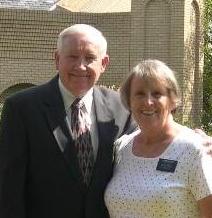
Our replacements in the Congo have finally arrived and are in full swing. If you want to follow the Congo Adventure you must hook up to their blog and read about what is happening now.

It is called

http://moodysinthecongo.blogspot.com

Good things are happening and will continue to happen with this great couple in place. It is fun to read their impressions of this wonderful part of the world.

Wednesday, April 1, 2009

No excuse, can’t even explain it – it has been very difficult to write since leaving Kinshasa. My Journal has no entries except . . .

Nov 5, 2008 Thursday
I am finally awake enough to think about a blog. We left Kinshasa .


So much has happened since coming home and so many mixed feelings have been hanging around us that we have not been able to put into words our thoughts.

We left Kinshasa excited to meet our daughter Christie and granddaughter Jenny in Nice, France and spend a great week. When we walked of the plane in nice there they were waiting for us.
All I could do was cry after not holding them for 19 months. We had a great week traveling around Nice and Paris, laughing, freezing (it rained and it was so cold we had to go buy coats).

Since it was so cold we found many opportunities to have rich, wonderful hot chocolate and pastries. We were on a mission to find the best hot chocolate in Paris... I think we found it many times.

Our homecoming was memorable with all the family at the airport to greet us. I was so excited I had to check my desire to run through the airport to find them.

Some of the grandkids were hard to recognize. I looked everywhere for Adam (middle) and couldn't find him only to find out he was standing right in front of me. He had changed the most.
Our first time to hold our two new grandchildren Samantha and Mari.

Who missed us the most? I think it was Rachel. she kept a calendar the whole time we were gone and knew to the hour how long we had left.

Matt and Shirlene had decorated the house with banners and balloons to welcome us home
Everyone loved their Congolese shirts we brought them and immediately put them on.

Waiting for us were a few things we had missed like FRESH MILK, rootbeer and microwave popcorn.

It didn't take Farrell long to get his glass of milk and toast our welcome home.

Kimberly had spend some time cleaning and spiffing up the homestead making it sparkle and she had decorated with our Congo treasures we had sent home. All the kids had chipped in and got us our favorite picture and hung it over the mantel.
We were now home without a car and our Torres sons came and parked their parents car in our garage for us to use. Their parents had recently left to go to Guatemala as mission president. They are like our own and we appreciated so much their thoughtfulness.

Mark took us to look at new cars and on the way we stopped at Temple Square. He had something to show us. There in the bottom floor of the visitors center was a picture of Luputa water project. There we were with all out Luputa friends. What a great memory.

Several times while on our mission Pres. Livingstone would ask me, “What are the ten things you are going to do when you get home?” or “What are the ten things you miss most about home?” My answer was always the same. “I try not to think about that so I won’t get homesick.”

Well now I am home and all the abundance of life in America hits you and you wonder if all of this isn’t just a bit overkill.

What was it that we had missed about home?
1. Standing under the shower and being able to open my mouth and taste the clean water. Actually Farrell said that it’s getting in the shower with an expectation that water will come out of the shower and it may even be hot water.
2. Going to the grocery store and finding anything you want. I cried the first time we went to the store as it seemed so overwhelming to see so much food in one place and that the price was so reasonable that I felt no guilt getting everything I wanted.
3. Driving down the street that had stoplights and stop signs and turning lanes and no pot holes.
4. Rules of the road – there actually are traffic rules and people somewhat obey them. We have encountered a few drivers that rival the Congolese drivers who seem to have no rules.
5. Playing with our two new granddaughters, born since we left on our mission.
6. Being cold – for 19 months we slept in a bed with just a sheet over us and we came home to the beginning of winter where we couldn’t seem to get warm.
7. Clean streets, garbage collection, the great law of no littering.
8. Airports that accommodate your needs, do not require bribes, have safe airplanes to ride in.
9. My mom. It took me two months to watch the video of her funeral. I wish I had some video of her. I miss my mom.
10. Family, family, family – calling them, visiting them, having dinner with them, thanksgiving , Christmas, New Years.

That is just a few things we have missed about home. But what about the Congo? What have we missed about the Congo.
1. Pascal, Eustache, the Moons, the Livingstones – our mission family - number one in our heartache.
2. All our friends – our church friends and our many friends we made doing projects – we receive emails from them and we love hearing anything about them and what they are doing.
3. The weather – I don’t ever remember being cold in the Congo except once when we visited Lubumbashi in the dry season and our hotel had no hot water. I couldn’t get warm for three days.- even the rain, though harsh at times left the world looking rejuvenated and everything grew with abandonment.
4. Wonderful bread – abundance of fresh fruit - $20 boxes of cereal.
5. Wivine, Mimi and Eric, our friends on the corner who sold us fruits, veggies and plants. Eric was my gardener and came regularly up to our balcony to tend to my multi. plants making sure I didn’t kill them.
6. Movie night every Friday night. Dinner and a movie at either the Moon’s or the Livingstone’s ( or the Thomas’ before they left).
7. Rationing of chocolate chips, coconut, rootbeer or any other treasure we were able to get from the US knowing that it was irreplaceable.(note that these are all food items)
8. 4 wheeling – always an adventure – my back will never be the same.
9. 24/7 with my companion. We had no choice but to spend our days together as we were not suppose to leave each other’s side. I miss that dependency and reliance on each other.
10. The presence of my Savior building, directing, inspiring and watching over all we did. I know he is still with me but our need is less today and the mantel of being a missionary is gone and so the feeling of his presence is less intense and I miss that.

So President Livingstone, there it is. I have thought of little else since we returned. Serving a mission really is one of the best times of my life. I am a different person. I have changed --- for the better I hope. I will never be the same.

And it is true what they say. “Once you go to Africa part of you stays in Africa.”

Tuesday, November 11, 2008

Africa, our friends and new family au revoir - Bittersweet

We knew the time would come when we would say goodbye to Africa and all our new family. Such a bittersweet farewell.

Our flower sellers who kept us in fresh flowers (for a wee price) and Eric (far right) who taught me much French and learned some English to communicate with me. He kept my beautiful garden on our balcony alive and well.
Wivine and Mimi who kept us healthy with their fresh vegetables and fruit. Their stand was on the corner of our apartment block. I bought many a pineapple through the fence. Wivine never missed a chance to prod me into buying more than I needed. Many of our francs went to supporting their enterprise. I cried when saying goodbye and they cried as well. A big part of our life in Kinshasa.

The hardest people to leave behind were Eustache and Pascal. They have been our mentors, our protectors, our friends and our sons. We love them like our own and it hurts to think we may never see them again in this life.

Our planning wall. Here we listed all the things we did or needed to do for our whole mission. The board was full and as we looked it over we realized why we were tired and why we were always so busy doing good.

One last lunch in the mission kitchen. Sis. Moon knows how to throw a quick lunch together but it wasn't the food that was so good as it was the company.

Our replacements the Davis from Montana arrived excited to get to work and ready for anything.

Newly appointed Bishop Jean Pierre Nguwa became a dear friend and a great help with our projects as he had a company that could transport goods for us and helped us make the City of Hope project a success. He gave us some special gifts as we left including a beautiful statue of a Congolese woman we are sure was made of alabaster not ivory. We are unable to post a picture of his statue as it is without clothes.

Pres. Livingstone an Pres. Koliker (counselor in the area presidency) presented us with our missionary release certificate.

Pres. and Sis Livingstone held a farewell dinner for us at the mission home with the Davis, Moons, Eustache, Mami, Steven, Staci, and Pascal. We had a lovely dinner and then the Livingstones and the Moons sang us a farewell song, fun and very tender.

We gave memory gifts to each person.
Pres. Livingstone: a French Dominos game so now that we were leaving he could play games. Farrell wasn't much of a game player so game playing had been held to a minimum.
Sis. Livingstone: My prize gardenia bush, a piece of material to match her Congo dress so she would have a pagne to wear with her dress and a Congolese cell phone holder to wear around her neck because she could never find her cell phone.

Sis. Moon: A Congolese outfit from Lubumbashi that matches one I have. We were always going to get matching outfits. Just a little late.
Elder Moon: A water bottle with a fan to keep him cool on his Congo walks

Eustach and Mami: Mormon Tab. cds to remind them that English is their second language
Pascal: Farrell's guitar so that he would start singing again. It had been a long time since we had heard Pascal sing.

Elder and Sis. Davis: We bequeathed our wonderful bug zapper so they could keep the mosquito's under control.

Eustache's family has become part of our own. We were here for Staci's birth and claimed grand parenting rights to his children. He is a wonderful man who keeps the mission going and serves well in the church.

Farrell had to play his guitar one last time so sang one for the road, Long Tall Texan.

It was special to have the Kohlekers there when we left. He paid us a wonderful tribute for all we had done and made us feel very successful.


Temporal Affairs had a farewell party for us and gave us a certificate that everyone signed with their thoughts. We will treasure them as we read these comments and remember them.

Pres. Albert, director of CES for the Congo.

The new finance officers, Bro Jacob and Bro. Zenga.

Good food always when you have a party in the Congo.

Maguy, who manages all the church properties, a beautiful Congolese woman who values her heritage and always wears Congolese fashions and looks wonderful.

Pres. Tierry Mutumbo, travel and purchasing and Didier Mutumbo.

Leaving the Moon's is like leaving your right arm behind. They are the best of friends and worked hard to support us in all that we did.

Eustache came to the party. We are sure it wasn't just the promise of good food. He was the one who helped Farrell with his French when we first came, he arranged for our safe keeping when ever we had to go across the Congo River to Brazzaville, he translated many things for us and gave us sound advise when ever asked. We could not have done our mission without him.

Pres. Lunda is a counselor in the stake presidency and runs the distribution center in Kinshasa. He too became a dear friend.
Bro. Bufunga who is IT for the mission and Temporal
Affairs. We drove him crazy with our IT problems and he drove us crazy as we learned how IT works in the Congo.

Willie was a service missionary in the distribution center. He is a hard worker. We went to his wedding a couple of months before we left. It was our second wedding to attend in the Congo and his wife Nancy was a missionary while we were there. They married as soon as she was released from her mission.

Pres. Thierry Mutumbo is one of the most handsome men I have ever met. He was just hired by Temporal Affairs and is a very hard worker. We love him. He loves our Savior and emulates that in all he does.


Our two Bishops, Bishop Kuteka of the Malueka Ward (second from left) and Bishop Haboko of the Kimbwala Ward (far right). These are two spiritual giants that we had the privilege to work with and observe in their callings. They are dear friends and their families are choice people.

As good as they get Bishop Haboko and Pres. Mutumbo. They both gave us tributes at the program and said many kind things. I think they love us.
Bishop Da Tarr is a Liberian who came to the Congo and is now head of Temporal Affairs. He is a gentle, kind man with an unshakable testimony of the gospel. His personal story of surviving war and finding the church is inspiring.

Our Temporal Affairs family.

After an adventure of a life time it was time to leave our home away from home. This was truely a bittersweet experience and one we would not have missed for anything. We are better because of our experiences here. We will never be the same.
We arrived in the Kinshasa on April 7, 2007 and left Kinshasa Oct 23, 2008.
What a glorious adventure!

Thursday, November 6, 2008

Neonatal Resuscitation Initiative, Our Last Hurrah!

Time moves very quickly when you are busy doing the Lord's work. Time for us to go home was drawing close but we still had much to do. We extended our mission a month so that we could do the NRT initiative for 2008. That decision set us up for a whirlwind final two weeks in the DRC.

On Oct 11th we went to the airport and picked up our replacements Neal and Sandy Davis and the NRT Team, Dr. Michael Preece and his wife Merrilee and Dr. Steven Grover and his wife, Carolyn and daughter Emma.
It was a crazy and wild beginning for the Davis as we got them to bed Saturday night at about 12:00 pm and then were up early to take the NRT team and the Davis to church at Kimbwala Ward. This was and was meant to be a cultural experience for all as the ride to Kimbwala and the ward itself are part of the African experience. We hurried home to fix dinner and be ready to meet with our local Congolese doctors, Dr. Ngoy and Dr. Empamossa who were going to help with the NRT training this year.

The Neonatal Resuscitation Program has grown into a wonderful partnership with our Congolese partners. They have worked hard in Kinshasa running many trainings to perpetuate the NRT program.

DR. Arthur Ngoy and Dr. Valerie Empampossa were trained last year (Aug 2007) and have been perpetuating the training ever since. We have supported them in two trainings this year as they have tried to make sure that every birthing attendant in their Catholic system has the benefit that the NRT training provides. We have grown very close to these two doctors and have had a wonderful opportunity to get to know them.

This year for the first time it was decided to use the local doctors to teach the training under the supervision of the NRT team from the US.

Kinshasa doctors, Dr. Empampossa and Dr. Ngoy.


The plan was to help these doctors develop a plan for the country and then have them manage the training and follow up. We asked Dr. Ngoy to come up with a plan for perpetuating the training and to help us see where he felt the program could go.

He came back with the idea that he could work first with the Catholic System of which he is a part and then spread out to the Protestant hospital systems and eventually to the government hospital systems. His needs were manuals, training kits and resuscitation kits for those who are trained. He arranged for us to collaborate with a hospital in Lubumbashi to extended the training even further this year. We met with Dr. Kaluiba in Lubumbashi and found an enthusiastic partner.

The program for 2008 was set up to test this idea as we held 2 trainings in Kinshasa and then flew to Lubumbashi and did two trainings. We had worked with Dr. Kaluba in Lubumbashi to identify possible trainers for that area of the country. We planned for 3 Lubumbashi doctors to come to the Kinshasa training and then return with the team to Lubumbashi for two more training sessions focusing on the Congolese doctors doing the training..

This was a big undertaking and required that the church NRT program place a lot of trust in these local doctors.

Training for Kinshasa went very well with 96 doctors, nurses, midwives and birthing attendants receiving the training.

The following day we flew 13 people to Lubumbashi: The NRT team consisting of Dr Preece, Sister Preece, Dr. Grover, Sister Grover and Emma Grover (daughter) along with the 2 Lubumbashi doctors Dr. and Dr. and Dr. Ngoy and Dr. Valerie , the Davis and ourselves. We were met at the airport by Dr. Ngoy's brother, head of a security agency, who gave us the VIP treatment. Dr. Ngoy was so excited to go to his home town of Lubumbashi and see his family for the first time in 3 years. He dressed for the occasion in a beautiful,intricately embroidered african dress.

The Lubumbashi training was held at our church building by necessity as the hospital did not have a place for the training. This was a real plus as the church is a beautiful building and was spacious, spotlessly clean, well furnished with tables and chairs and with a kitchen for preparing lunch and breaks.

The best reason for using the church was the beautiful clean bathrooms with flush toilets, toilet tissue, soap and paper towels. Dr. Ngoy stated, after coming out of the bathroom, “My that is like a palace.”

We had the ward bishop. Bishop Justin hosting at the building and another church member Deseri who had helped us set up the program who greeted people and helped us make sure things ran smoothly.


Relief society sisters catered the breaks and lunch and did a wonderful job. The training could not have gone smoother and the people attending seemed to enjoy their experience, were very animated and seemed to grasp the concepts fully.

Lubumbashi doctors


After each training we have a ceremony and present certificates to the participants and have a speaker give a short keynote address.


The first day the Providence Health Minister gave the address. He stated that two years ago they were in a national meeting with the Minister of Health and were discussing the needs of the DR Congo. The number one problem they faced was infant mortality. Their statistics show their death rate at 150/1000. They made some changes and tried some things and came back together a year later and found that their statistics had changed and actually gotten worse 165/1000 infant mortality. He prayed about what to do and how to help this problem and the missionaries from the Church of Jesus Christ of Latter-day Saints came to his office asking permission to do a training on Neonatal Resuscitation. He had heard of this program in Kinshasa and was very excited to have it come to Lubumbashi. He attended the first day training and said he was over whelmed with the simplicity of the training an the ability of all who attended to grasp the concepts and be able to take it back to their health centers. He was very appreciative of the materials that were given to help the health centers. He said this was an incident of having a problem, praying about it and God sending the answer. He then stated that we are not done until every infant born in the Congo has the benefit of the NRT training.

Our new champions in Lubumbashi are excited and have already started making plans on how to perpetuate the training, reaching out to smaller areas maybe even having them come into Lubumbashi for training or taking doctors out into the field to train

Our last night in Lubumbashi we were invited to dinner at the brother of Dr. Ngoy. His wife had fixed us a real Congolese meal and had their daughters sing for us.


they sang in English, Kumbaya. They ended by presenting each family with a gift. Our host stated he just wanted to say thank you for bringing the NRT program to his town and blessing his people with the gift of life for their children. He was very gracious.


The opportunities are endless and the chance for the church to support a national program seems very possible. We could not have asked for a more successful training this year. We have made wonderful friends who we will never forget.
Our prayers will be with the Davis as they plan for supporting the doctors in the perpetuation of this training and in planning for another training in 2009.

Friday, October 3, 2008

The Worth of a Girl

What happens to the children of the Congo whose parents are killed in the wars or who die from aides? Where do the young girls go who are living in such poverty that their parents abandon them because they are unable to feed them. What happens to those girls who are left on their own to survive when there are no relatives or neighbors who are willing to help.


Young girls are at high risk everywhere here in Africa and often little value is put on their lives.

A few months ago the Parks, a missionary couple in Lubumbashi asked us to come and see an orphanage they had visited and felt was deserving of some help.

Maison d’Accueil Amani pour Filles Abandonnees is an organization managing an orphanage for girls who are abandoned or orphaned. The girls are at high risk for making it past their teen years. The people running the orphanage are beautiful, giving people who have a reverence for life and a Christ like love for children, especially those in difficult circumstances. Often the red cross will bring them girls they find who need some where to stay.

Today the orphanage supports 68 of these young girls from infants to 17 years of age. The girls come from Lubumbashi and from the war area. Many are brought to them by the Red Cross (CICR).


They have three categories of children: 1) abandoned girls, 2) orphans of both parents 3) girls from difficult situation such as divorce and poverty.
The leaders want to be able to help children find their parents, help them find a place in society and to employ them in gainful employment helping them take charge of their own lives..

We were very impressed with this orphanage as the compound was clean.

It had adequate sanitation facilities-showers and latrines.

They have a garden that the staff and children manage.

The children’s rooms were neat and orderly and there was no odor of uncleanliness in the rooms.
The children at the orphanage were clean and polite and appeared to be well cared for.

The needs for this orphanage were many including food, clothing and supplies. We looked at their request and saw a great project that would build and strengthen this organization.

They wanted to start a sewing school for the girls to teach them to sew there by giving them a profession to support themselves when they leave the orphanage.

The project supplied sewing machines, embroidery machine, and supplies to start a sewing school.


The monies generated from the sewing will go to supporting the orphanage.
There are two staff members who are trained seamstresses who will be the teachers and the girls will be given the opportunity to learn to sew and to sell what they sew at the market. The orphanage will also incorporate the church’s “Family health and Hygiene” program into their classes to prepare the girls for better health and avoidance of disease and illness
The project will become self sustaining as the orphanage is able to generate some income from the sales of the articles they will sew.

When we picked up the sewing and embroidery machines we didn't realize that we would have to assemble them along with their tables.
The girls got very excited when we pulled into the orphanage with the truck loaded down with boxes.
.
Assembling the machines is a technical job (where is Elder Moon when you need him - back in Kinshasa doing his real missionary work). We hired a technician to assemble the machines and went ahead with the ceremony for turning over the goods to the orphanage.

There was much clapping and singing and many thank yous. The girls were so excited to see the equipment coming into their home knowing they were going to get to learn to sew.

The orphanage asked us to keep the donation quiet as they feared that if someone found out they got all this equipment that they would be robbed. This had happened previously when someone donated some supplies to them and the whole neighborhood knew about the donation

The day after the ceremony we took the two sewing instructors to the store to purchase sewing material and notions to get their business going.

Having a love for sewing I was right in there pitching for the gold thread and the beautiful fabrics.

We had a great time SHOPPING! Some just stood to the side and rolled their eyes.

Fabric, thread buttons, snaps, hooks, needles, ribbons, lace decorative thread the pile kept getting bigger and bigger.
I told Pauline ,the shop owner, that we were on a budget of $500. She assured me that we would be well with in our budget and they continued to add things to the pile.

These two sisters were all business. You could see their brains working figuring out all the things they could make with these supplies and the opportunity to generate some needed income for the orphanage.

Pauline started adding up the bill - and adding - and adding -

Farrell watched the process getting a bit worried that we were way over our budget.

Finally Pauline announced the news - $830 grand total . . . . . . .

There were some gasps, some sighs and Farrell did a lot of choking sounds.

The instructors looked sadly at their pile of goods trying to decide what they should put back.

It was painful and wrenching as we watched them trying to figure out what was the best thing to do without.

Finally Farrell stepped up and said "Ca va." and pulled out the money to pay the price then leaned over to me and said "I think you just spent $300 of YOUR money. I was delighted - some of the best money I have ever spent.
All though we didn't put anything back, not everything on their list was purchased. They were not able to get the electric scissors they wanted very badly but that is give and take , right?

After we loaded the goods in the truck Pauline beckoned me to the second floor of her shop where she gave me a beautiful pink Congolese outfit. I think she felt rather guilty about not keeping a better handle on things but not that guilty - she took the money without flinching a bit

Can't wait to go back to Lubumbashi next week and see what those girls are learning and see if they have started generating an income yet. Can't wait!

Thursday, September 25, 2008

You win some. You lose some.

Early this summer we went to look at a new project submitted by OBIPHA, a handicap organization. They are located in the Kingaseke area and are trying to meet the needs in their community of the blind, physically handicapped, and mentally handicapped (specifically Autism).
They have no funding source but work together trying to help the handicapped be productive and learn ways they can generate an income. They have a school where they run a full curriculum for the blind, They teach sewing, hair design and nail care . They requested wheelchairs for their physically handicapped, supplies for their blind students, and support for a bakery they are trying to run as an income stream for the organization.

On our first visit we were greeted warmly to the neighborhood. The area was difficult to get to even with a truck as most of the roads are very narrow and not much more than walking paths. We met some of the blind students and the girls learning to braid and extend hair. The blind students are being taught to be pig farmers as it is a type of work they can manage.


They are renting a complex for their school and tables and chairs to furnish it. They have a small library and a few supplies including some sewing machines for their sewing class.


Emmanuel is President of the organization. He is also a minister in the Methodist church. The young man (center) is blind and was taught braille by a concerned member of the community. He now teaches the blind but he has no equipment other than his personal braille tablet and white cane. Next is Willymar, director of the center and a member of our church.

One of the blind students took us to see the pig farm that actually was a pig house. The pigs were boarded into different rooms of a house each room housing a mother pig and her young. It was impressive. I was snapping away pictures trying to hurry this experience along and get out of the pig house when . . .

I stepped off of a step and the floor beneath my foot gave way dropping my leg into a pit of some kind of liquid. My camera went flying and I was splayed out on the floor with my right leg down in this pit. Farrell and our guide pulled me out and took me outside where I examined my dripping leg for cuts – none were found – a miracle as the floor that gave way under my foot was a rusted piece of tin covering a hole. I was soaked to my waist in this liquid. Needless to say I smelled terrible. This area has no running water and all that was available was a bucket half full of water. Our guide grabbed a totally worn out wash cloth (a shredded rag) and started wiping my legs and shoes off. I squeezed out my skirt then dipped the bottom into the 1/2 filled bucket of water and then rung my skirt again. I rinsed my shoes off in the bucket and called it good. Our guide was so upset and Farrell looked like he was going to throw up at anytime. It was one of those times when you just pull up your pig poop skirt and say, ”Ca va” and move on

We headed back to our truck where I wiped down with some antiseptic wipes and lathered my arms, legs and hands in antibacterial gel and called it good. It wasn’t good. I was having a hard time myself with my stomach wanting to fight back but, we had not finished our tour as we still needed to go to their bakery. I knew if we left I would just have to return later to see the bakery so I opted to just finish the tour as this area was such a difficult place to get to.

We all jumped in the truck and headed for the bakery. I noticed that Farrell turned the air conditioner up full blast and everyone opened their windows with some even hanging out their windows.

Now I know this is a bad story to tell to you who are considering a mission but let me reassure you. . . I survived. I didn’t get a bruise, a cut or a scrape from the fall. I didn’t develop any terrible disease and best of all I got over it. We actually don’t talk about it and I dare anyone to mention it as it is best forgotten.

My camera literally bit the dust and has not worked since. Elder Moon, true to his form, is repairing it. I loved that camera so I encourage him to try whatever he can do to make it a survivor. Last I heard he had sanded down a drill bit small enough to work on the camera and is building a new part for it. I have no doubt that before we leave I will have my camera back.

As the camera was dead I didn't get any pictures of the bakery which was just a cement building with open windows and door, a wooden trough where they mixed the dough and a large brick oven into which they were putting loaves of bread with a big wooden paddle. It out smelled my skirt and we were amazed at the productivity of this little building out in the middle of no where accessed only by a rutted trail. The handicapped students were working in the bakery to earn money and they were selling everything they could make, their need being more supplies to boost their production so that they could increase the income which would support the students and the association.


We went to work developing a project from what we had seen on our visit -- the project which has ever since this ordeal been affectionately called the PIG POOP project.

We wanted to help them develop an income stream with their bakery but it didn’t quite meet our guidelines so we settled on putting the support to the Blind School.

The products we needed were not available in the Congo and we couldn’t get them sent in through the church (customs issues) so we went to some priests who have dedicated their order to the support of the blind. They ordered the supplies in from Europe. The list of goods included: computer, braille typewriters, braille notebooks, braille math system for learning math, audio watches, white canes, braille paper, plastic tables and chairs and 10 wheelchairs to help the physically handicapped in the organization.


When we picked up the braille typewriters they were very dirty and not in good repair. These machines are much like the old, old typewriters before electric.. They were suppose to be refurbished but we had to get Elder Moon to work his magic to get them in proper working order.


We held a closing ceremony at the center and one of the blind students serenaded us.

Farrell explained the Family Health and Hygiene program the center was going to offer to the community in an effort to help the community improve their management of family health and the avoidance of disease.

The closing ceremony was hampered as the wheelchairs were not delivered as promised. They didn’t come till the next day. We left the ceremony thinking the w/c would be delivered later in the afternoon but it didn’t happen. The w/c recipients thought that, Emmanuel, the Assoc. President had absconded with the w/c and they became very angry. He was roughed up and his phone was stolen. It was not a very pleasant situation but the next day the chairs were delivered and given out. This incident put a dark cloud over this project and caused us to second think our desire to help this group. We had thought this organization was stronger and more united than this and it was upsetting to have Emmanual treated with such disrespect.


Not our favorite project but one that will benefit people. We wished we had left the wheelchairs out of the proposal but then again we have to remember how desperate these people must feel when they are trying to survive in such poverty and have been mistreated for so many years. We hope that the blind school will be stronger, which it undoubtedly will be and that those who are trying very hard to be independent and overcome poverty will be strengthened by the supplies that were provided.


(Yes that is a Congolese dress. I needed a new outfit after this project)


Here is a tender photo of a man who came to the ceremony to receive a cane. He is blind and has had his left leg (below the knee) amputated. He was so excited to get a cane but as he left I caught this picture of his shoes. I wondered how he was walking in this rough terrain, blind and with a prosthetic in those worn out shoes

Wednesday, September 24, 2008

Oh my head Hurts!

Here in the Congo it often feels as if time has stood still for the last 100 years and you are just an observer looking back in time.

Children are taught to carry a hughe amount of weight by balancing it on their heads. Walking is the main way of getting around in the Congo as few people have cars or other transport. It isn't a new idea, in fact it is an ancient idea but here in the Congo some things never change.

Every day you can see people bustling to get to the market. Their pace is fast and their posture erect - must be why they have such good posture.

I remember as a teenager walking with a book on my head trying to balance it. I found it very difficult. I wanted to improve my posture. Posture is not a problem here. I have never heard a mother here say "Stand up straight Johnny, don't slouch.

Enjoy these pictures. I have been collecting them to share with you over our whole mission. It is such a part of Africa.

big or small it doesn't seem to make much difference.
A baby on the back and a full bowl on your head leaves your hands free to do many other things.

Some people can carry everything on their head they will need when they set up their road side stand. Just keep piling it on

It is the way. Many women even carry their purse on their head rather than carry it.
This is full load!


Boiled eggs are a big lunch time treat and in the morning you may see a man hurrying down the road with the eggs piled twice as high as this man has. I keep missing the big shot because I am always so amazed they he will scurry in and out of traffic, balancing this huge column of eggs on his head with out any hands to steady it. I get so engrossed watching the balancing act I forget to take a picture.

Well, you never know when you may need a stool so you better carry one along.
We stopped these ladies in Mweni-Ditu on their way home at night from a day at the marked. I wanted the picture of the sewing machine on the head but everyone wanted their picture taken. When I had snapped the picture they wanted to be paid for me taking the picture. I refused and told them I don't pay for pictures. They weren't happy.
Learning at an early age. That yellow crate is full of soda pop bottles.Heeeaavy!

Nothing is wasted in the Congo. Often you will see people gathering wood from a fallen tree and then they take the wood home and make charcoal out of it which they will use for their cooking fires and sell for some income.
Want a scarf? Get it from the scarf lady. She has at least 100 scarfs on her head any of which she will sell you for a price. The price being double for a mondeli.
When you drive down the street you see people toting their loads on their heads where ever you look.


Aha, they must have got some new chairs at a good bargain.
When you have to tote a baby on your back and carry your bundles you shouldn't forget how handy it is to put one of the loads on your head.
Another crate full of large bottles of beer. We once saw a man carrying a crate of beer on his head and one crate in each hand held only by his finger tips. Again I was so fascinated I missed the awesome picture. I must add he didn't look like it was a very heavy load but we know different.

Women daily gather greens from the garden and tote them to market to sell. These three are dodging traffic as they cross a very busy thoroughfare.

My favorite has to be the bread ladies. Every day, several times a day you will see woman picking up bread at the Victoire (a large bakery). They carry it back to their neighborhood where they sale it Bread is a main stay and often people have a loaf of this bread along with a cup of tea for breakfast. Lunch may be a handful of peanuts, a banana or another piece of bread. The only real meal that is eaten is the evening meal which mainly consists of foofoo, rice and beans with ground greens and maybe a little fish or chicken (but meat only on a good day).


Where ever we have traveled we see people gathering sticks to make the charcoal. It is a very important fuel.


The hardest job is the toting of water for daily needs. It is endless and requires all to participate. It is unbelievable that a child can carry this much wait on their head. It isn't easy and they usually walk/run trying to shorten the distance to home.


The path is often steep and makes it rather treacherous for carrying a heavy load.


This is one of my favorite pictures. I didn't take this one. But I love it, not sure why. Maybe it is because it is just sooooo Africa.

Remember the chicken lady - another favorite from Luputa

Returning home after spending a day at the Marche sewing beautiful Congolese clothes.

Don't you Love it! Very African!